
Management briefing
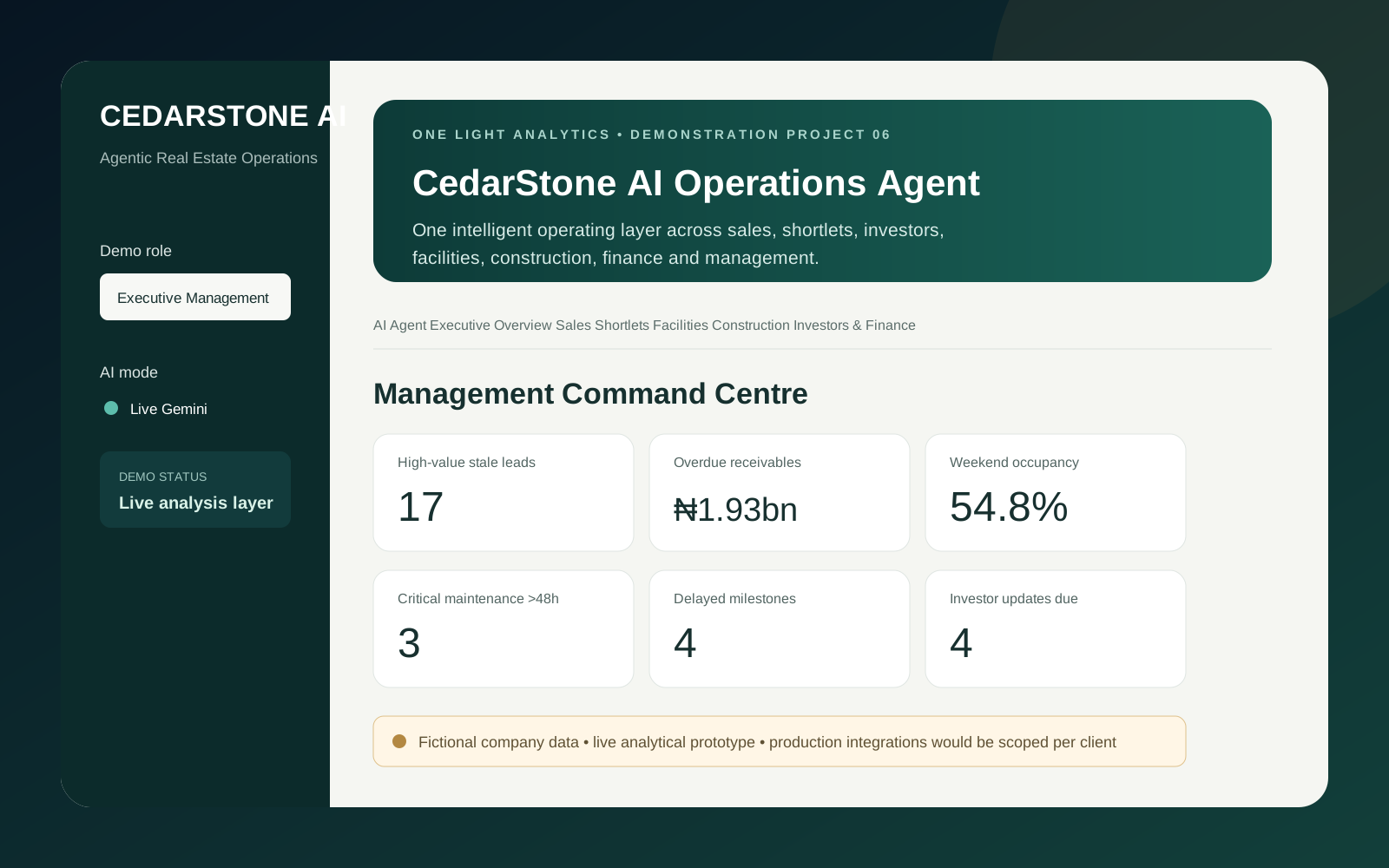
Surfaces cross-functional issues such as stale leads, overdue receivables, maintenance escalation, construction delays and investor updates.
Demonstration Project 06 • AI & Transformation
A working prototype showing how a real-estate business can connect management intelligence across sales, shortlets, facilities, construction, investors and finance through one AI-enabled operating layer.
The business problem
A diversified real-estate company may sell units, develop properties, manage shortlets, coordinate construction, handle maintenance, collect receivables and serve investors at the same time. The challenge is not simply storing those records. It is knowing what requires attention now, understanding why, and getting the right team to act before an issue becomes expensive.
What the live system demonstrates
The public prototype uses a deliberately designed fictional database so the system can demonstrate realistic business conditions without exposing any client data.
Surfaces cross-functional issues such as stale leads, overdue receivables, maintenance escalation, construction delays and investor updates.
Identifies high-value leads that have gone stale and helps management focus commercial follow-up.
Calculates upcoming occupancy and booking value so hospitality operations can respond before low demand becomes lost revenue.
Flags critical maintenance tickets that remain unresolved beyond a defined service window.
Traces delayed milestones, dependencies, vendors and underlying causes rather than reporting only that a project is late.
Surfaces overdue balances and investors awaiting scheduled communication or portfolio updates.
How the prototype works
Structured operational records across departments and properties.
Functions that search and analyse data and support controlled simulated actions.
The model selects the appropriate approved tool for a natural-language request.
Dashboards, role context, private sessions and activity logging make the system inspectable.
Why it matters commercially
The strongest use case is not “ask AI a question.” It is creating an operating layer that brings together information, exceptions, analysis and approved actions around the decisions people already make every day. The same architecture can be adapted to organisations in retail, education, healthcare, professional services and other multi-department environments.
Demonstration boundaries
CedarStone Properties & Living Ltd. is fictional. The operational data was created specifically for this prototype. The public demo does not execute real payments, contracts, emails, WhatsApp messages or external business transactions.
The project is evidence of ONE Light Analytics' approach to AI-enabled business systems, not a claim that the prototype is a finished production deployment.
Your organisation will not look exactly like CedarStone
We can map your workflows, systems and decision bottlenecks, then determine where an AI agent or automation layer can create measurable value.