
Good units after recorded rejects
← All sector AI demonstrationsThe output number
Sector AI 03 / Manufacturing & energy · ForgeWorks AI
The output number
is only the beginning.
Connect production, maintenance, materials and energy to the decisions behind the next shift. See the operating exception, inspect its record and prepare a reviewed response.
Fictional baseline · inspectable operating evidence
Good-output attainment · not OEE
Usable cover below supplier lead time
Grid + diesel cost per good unit
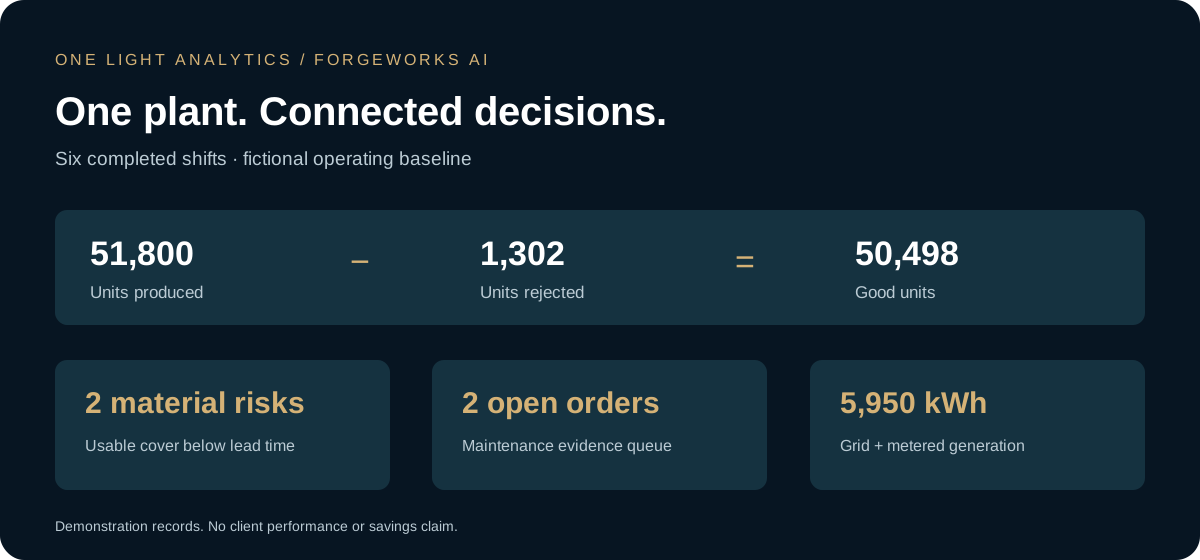
51,800 produced − 1,302 rejected = 50,498 good units against 56,000 planned. All numbers are fictional starting conditions, not improvements achieved for a client.
The operating challenge
Production does not work
in isolation.
A shift misses its target. Maintenance has an open issue. Stores reports stock on hand, but part of it is quarantined. Finance sees energy spend without the usable output behind it. ForgeWorks brings those records into the same conversation.
The question: Which exceptions need attention before the next shift, what does the evidence say, and who can approve a useful next step?
Interactive plant evidence desk
Follow the signal
to its source.
Switch between production exceptions, material exposure, maintenance orders and energy readings. Inspect any record or export the displayed queue. This desk uses the reproducible baseline; it does not run a language model.
Loading the plant records…
Record evidence
Choose Inspect to follow the evidence.
The full operating record will appear here.
The agent workspace
Ask a business question.
Get the records behind the answer.
Where did good output fall short?
Separate gross output, rejects and saleable units. Follow shift IDs, recorded downtime and issue notes without presenting them as proven causes.
What could interrupt the next run?
Compare usable cover with supplier lead time. Exclude quarantined stock and keep unconfirmed purchase orders separate from receipts.
What did each good unit cost in energy?
Compare grid and metered generator energy over the same production period. The plant-manager role can inspect fictional energy rates and costs.
Explore the standalone app: Open ForgeWorks AI for the agent workspace, role-based evidence and human-confirmed work-order drafts. Live AI is configured; Scenario mode is also available. The website evidence desk uses the fixed baseline.
Controlled actions
A useful proposal.
A visible approval.
Start from the asset record
Inspect the asset and its existing work orders. A new proposal validates the asset, priority and issue, and rejects an existing open order for the same asset.
Keep the decision with the team
Only maintenance and plant-management roles can prepare a work-order draft. The model has no commit tool. A person must explicitly review and confirm.
Preserve the action trail
A confirmed simulation rechecks the role and record revision, creates the session work-order draft and records the actor and after-state. Stale proposals are rejected.
Scope: No machine command, production release, electrical instruction, supplier order or external maintenance dispatch. This is a reviewed administrative workflow, using fictional session records.
The value to measure
Less fragmented context.
Better prepared decisions.
A client implementation would connect approved production, maintenance, stores and energy systems. The first measures would be time to prepare an operating briefing, time to identify a material exception, duplicate work-order frequency and the completeness of decision evidence.
Yield, downtime and energy cost may be valuable outcome measures, but improvements must be measured against a real baseline and operational changes. This demonstration does not claim savings or diagnose equipment faults.
Discuss your plant workflows ↗Evidence and boundaries
A clear denominator.
A clear boundary.
Six completed shifts share the same production and energy IDs. Good-output attainment is good units divided by planned units; it is not OEE. Energy cost includes recorded grid purchases and diesel consumption, excluding capital and maintenance costs. Quarantine is excluded from usable stock.
The fixed business clock is 10 October 2026, 09:00 WAT. All records and rates are synthetic. Demo-role switching illustrates tool permissions, not production authentication. Resetting the standalone app discards simulated changes.
Agentic AI for manufacturing operations
Connect the next decision
to the whole operation.
Build around the records, responsibilities and approval steps your teams already use.